Dec 16, 2025
Professor Kawasaki Talks about a Nuclear-Free World
OBJECTIVE.
Xinwei's report
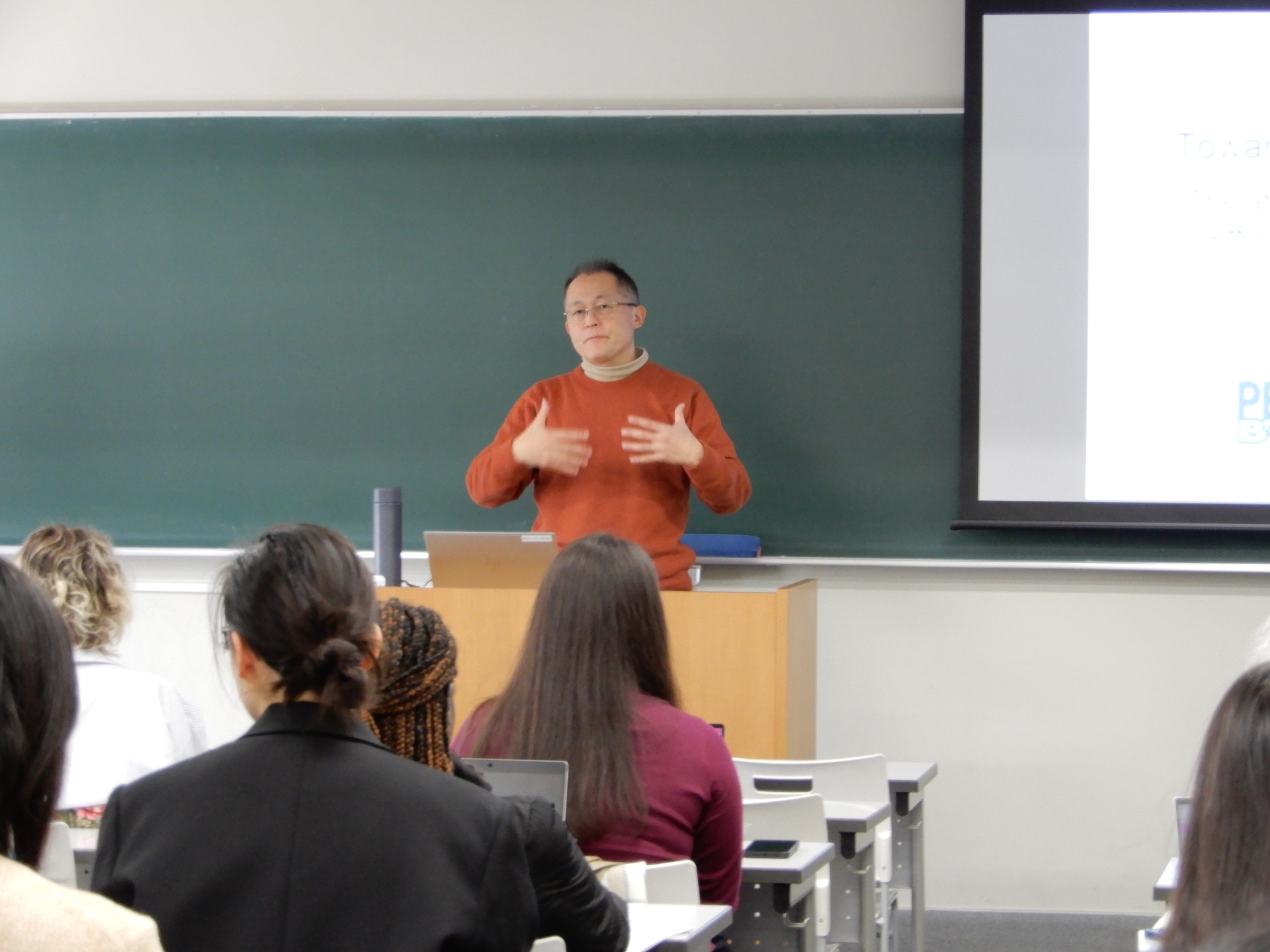
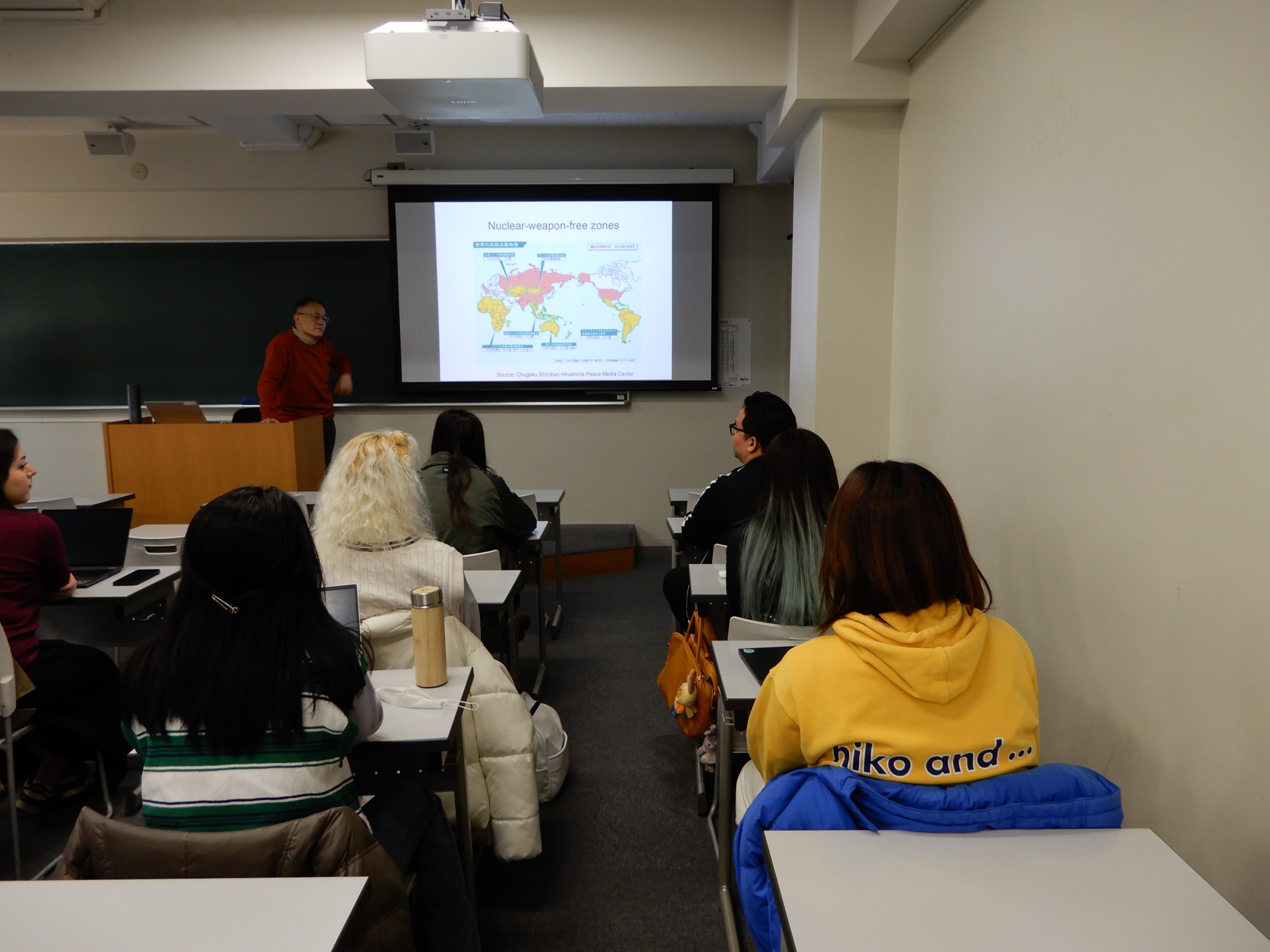
On December 16, a lecture was delivered by Mr. Akira Kawasaki, Co-Chair of Peace Boat and a member of the International Steering Committee of the International Campaign to Abolish Nuclear Weapons (ICAN). Referring to ICAN’s Nobel Peace Prize, he introduced the experiences of Hiroshima atomic bomb survivors and explained their significance in the global anti-nuclear movement. Through this lecture, nuclear issues were placed within a broader historical and international political context, showing that the anti-nuclear movement is not only a moral appeal but also a long-term global practice.
The lecture encouraged reflection on the tension between the principle of nuclear non-use and the realities of contemporary international politics. On the one hand, the memory of Hiroshima is repeatedly commemorated worldwide as a symbol of peace and anti-nuclear ideals. On the other hand, in conflicts such as the Russia-Ukraine war, nuclear threats are often framed as “rational security choices” and have become increasingly normalized. At the same time, nuclear-armed states continue to modernize their arsenals, while non-nuclear states bear unequal risks of nuclear deterrence. Under these structural differences, the nuclear taboo is often challenged in practice by real political considerations.
For these reasons, maintaining the principle of nuclear non-use under current political pressures remains an important task. The remembrance of Hiroshima should not remain only symbolic, but should contribute to efforts toward nuclear disarmament, dialogue, and lasting peace.
The lecture encouraged reflection on the tension between the principle of nuclear non-use and the realities of contemporary international politics. On the one hand, the memory of Hiroshima is repeatedly commemorated worldwide as a symbol of peace and anti-nuclear ideals. On the other hand, in conflicts such as the Russia-Ukraine war, nuclear threats are often framed as “rational security choices” and have become increasingly normalized. At the same time, nuclear-armed states continue to modernize their arsenals, while non-nuclear states bear unequal risks of nuclear deterrence. Under these structural differences, the nuclear taboo is often challenged in practice by real political considerations.
For these reasons, maintaining the principle of nuclear non-use under current political pressures remains an important task. The remembrance of Hiroshima should not remain only symbolic, but should contribute to efforts toward nuclear disarmament, dialogue, and lasting peace.
Shiwen's comments
Kawasaki-sensei’s lecture was deeply enlightening for me. He vividly explained, from multiple perspectives, the importance of opposing nuclear weapons and the achievements that have already been made in this effort. The nuclear strike caused irreparable harm to the people of Hiroshima. This lecture gave me a much deeper understanding of the relationship between humanity and nuclear technology, and it has also made me look forward even more to our trip to Hiroshima at the end of January!